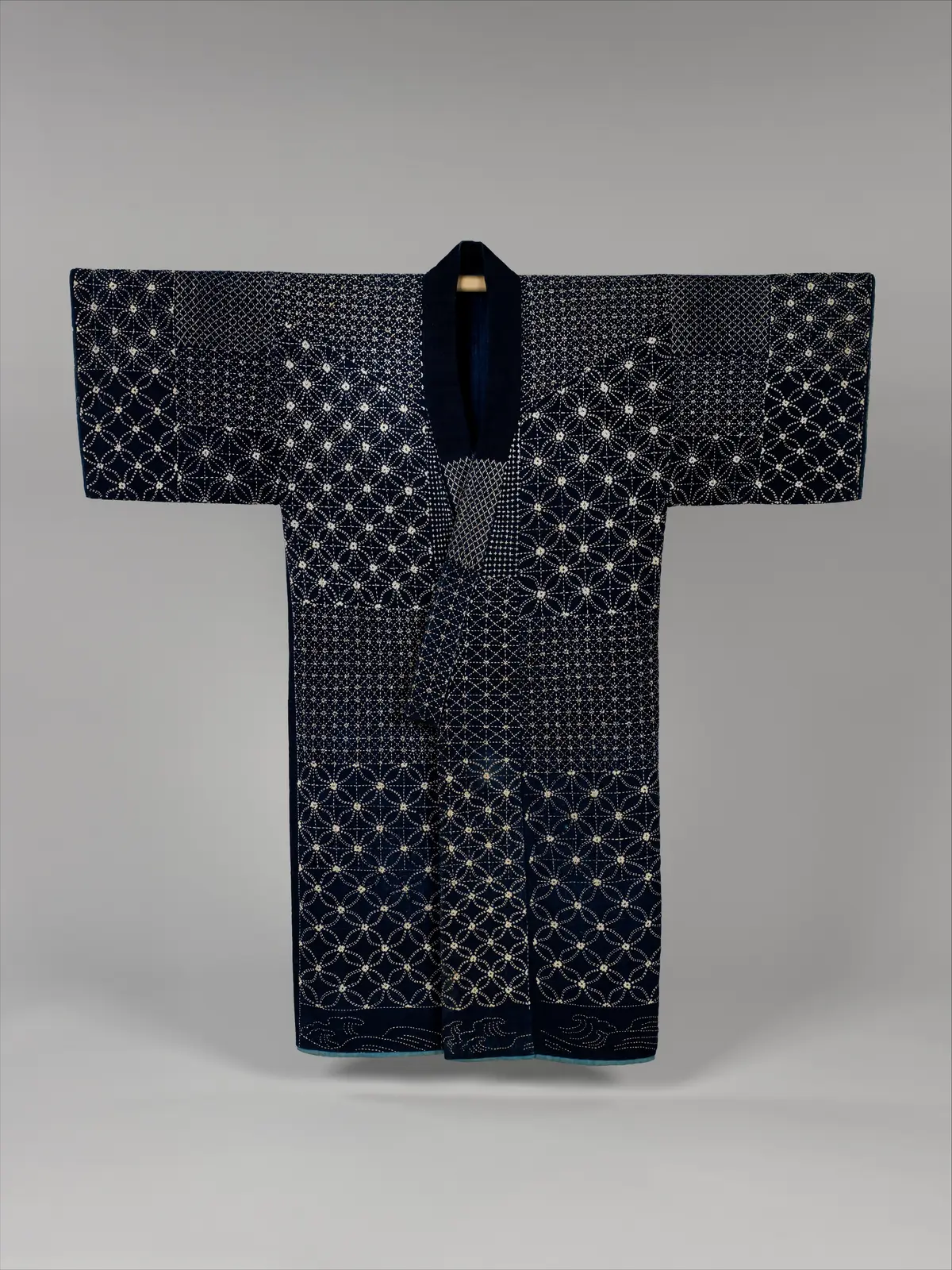
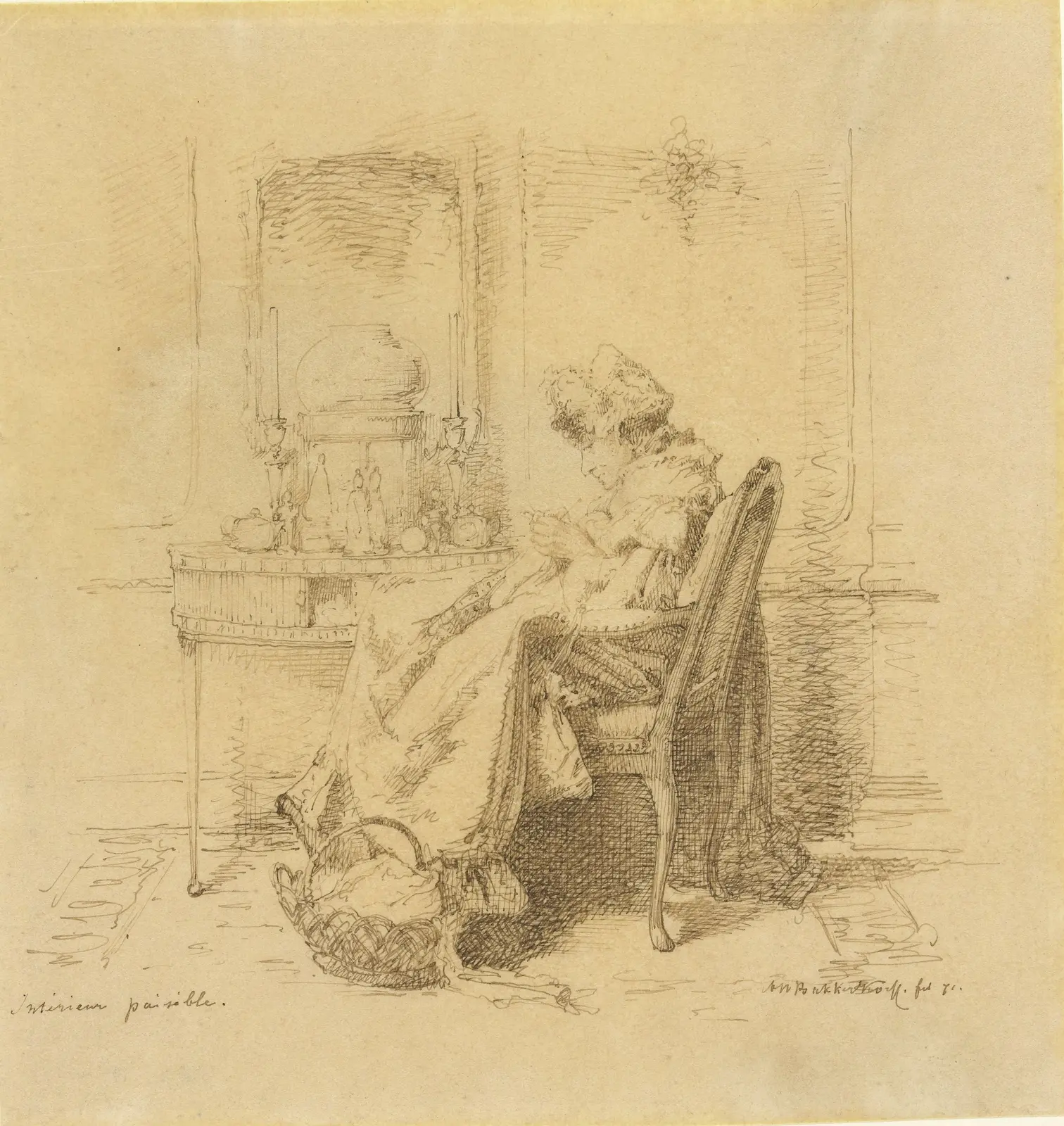
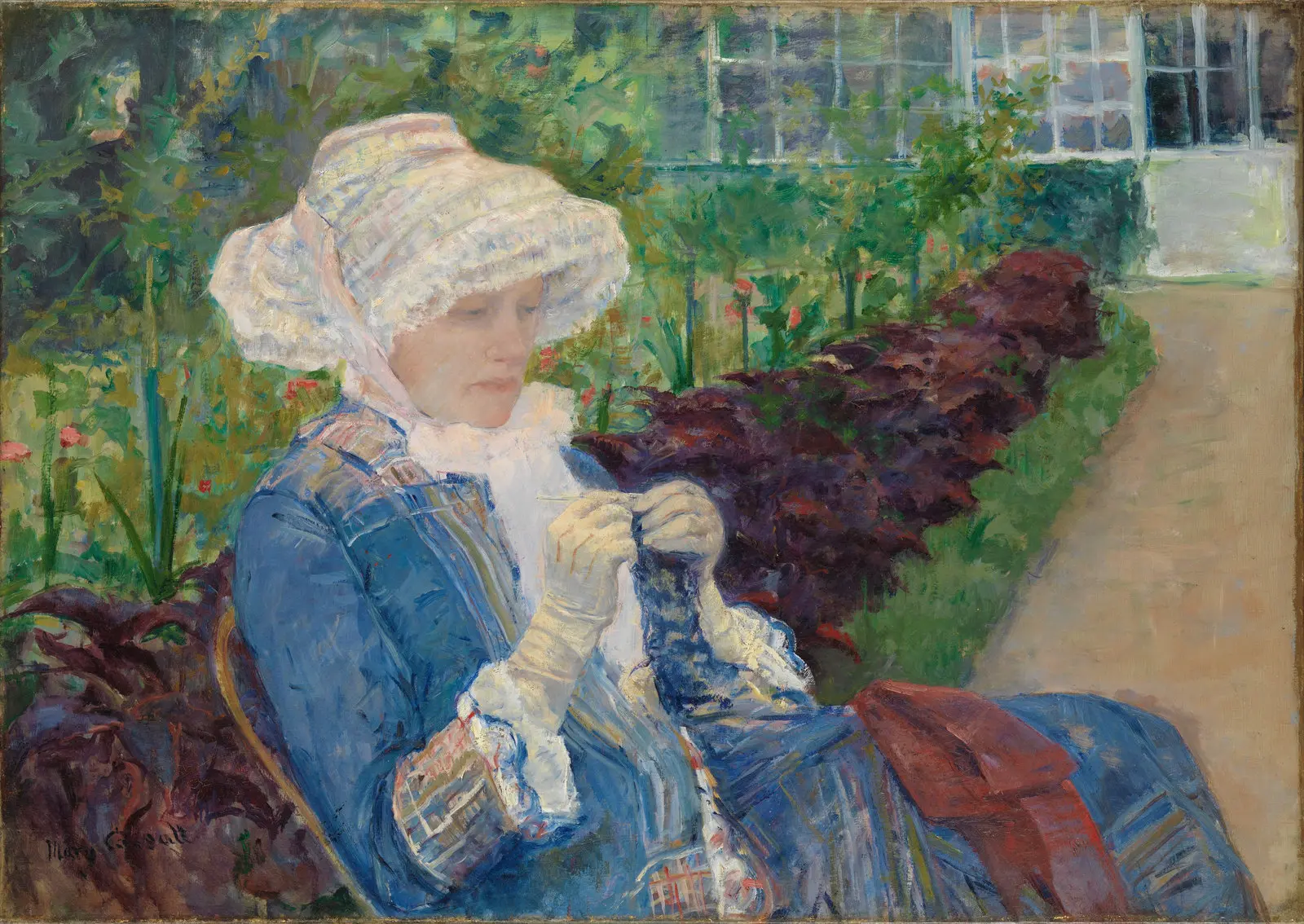
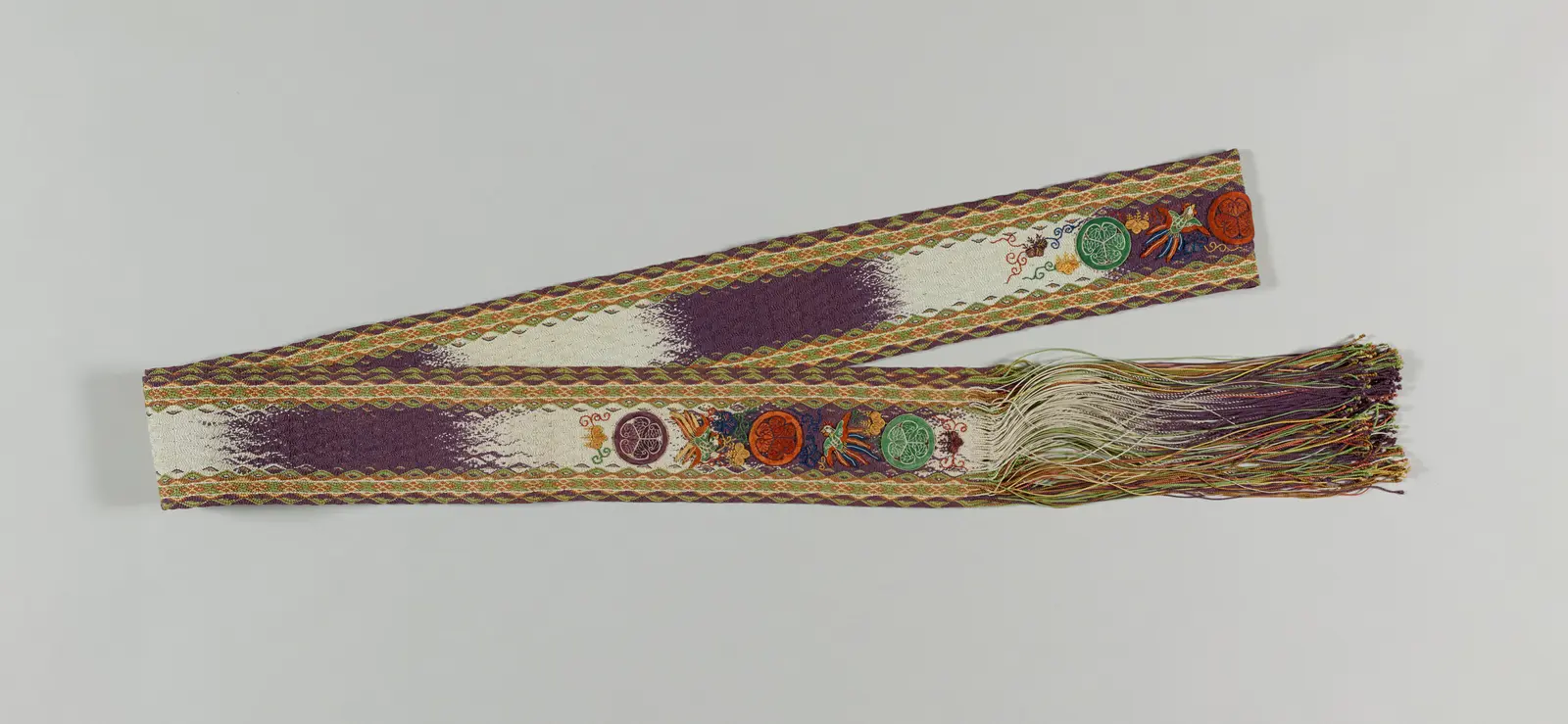
Loop and stitch structures made with hand tools, such as knit and purl, crochet, sashiko running stitch and braided cord, explained by how each loop or strand is held in place; no patterns to follow and no woven cloth.
Hitomezashi sashiko gives every grid line one on-or-off choice. The regions its stitches draw can always be filled with two colors, unique up to a swap.
Picture credit
"Sashiko jacket, Japan, second half of the 19th century (Metropolitan Museum of Art 67.172.1)" by Unknown author — https://commons.wikimedia.org/wiki/File:%E6%97%A5%E6%9C%AC%E3%81%A8%E7%B1%B3%E5%9B%BD%E3%81%AE%E5%9B%BD%E6%97%97%E3%82%92%E7%BA%8F%E3%81%A3%E3%81%9F%E6%97%A5%E6%9C%AC%E5%A5%B3%E6%80%A7-Sashiko_Jacket_MET_DP330768.jpg — CC0 1.0 (https://creativecommons.org/publicdomain/zero/1.0/); modified: metadata stripped (embedded staff names and camera data removed; image unchanged)
"Lydia Crocheting in the Garden at Marly (Metropolitan Museum of Art 65.184)" by Mary Cassatt — https://commons.wikimedia.org/wiki/File:Lydia_Crocheting_in_the_Garden_at_Marly_MET_DP165250.jpg — CC0 1.0 (https://creativecommons.org/publicdomain/zero/1.0/); modified: cropped (black border, color bar and copyright line removed), resized to 1600 px wide
"Sageo cord for a tachi, made of kumihimo, with Tokugawa family crests (Tokyo National Museum I-1406)" by ColBase: Integrated Collections Database of the National Institutes for Cultural Heritage, Japan — https://commons.wikimedia.org/wiki/File:Sageo_cord_for_tachi_made_of_kumihimo,_%E7%B5%84%E7%B4%90%E3%81%A7%E4%BD%9C%E3%82%89%E3%82%8C%E3%81%9F%E4%B8%8B%E7%B7%92_(%E7%B6%9A%E5%B9%B3%E7%B7%92).jpg — CC BY 4.0 (https://creativecommons.org/licenses/by/4.0/); modified: metadata stripped (camera data removed; image unchanged)
Analytics cookie?
Google Analytics would set a cookie to count visits. Cloudflare Web Analytics, which sets no cookie, runs either way, and the site carries no ads. Stored and sent